
Industrial Compressed Air System Assessments in Southern California

Air system costing too much or acting up? Start with a walkthrough, or go deeper with a measured assessment. We agree what we’ll check and what you’ll get before we schedule.

Assessment framework

Two Levels of Assessment

The Compressed Air Challenge, a joint program of the U.S. Department of Energy and the compressed air industry, defines three levels of review. We do the first two: a walkthrough and a measured system assessment.

Start here

Walk-through evaluation

Overview and priorities

The best place to start for most plants. We look at the whole system at a high level: what the air is used for and how clean it needs to be, the compressors and controls, the piping, pressure across the plant and obvious waste. You get a written report with a simple system diagram and what we found.

Good for plants that have never had an assessment, problems nobody has pinned down, or anyone who wants a baseline before spending more.

Go deeper

Measured system assessment

Data and recommendations

We take readings across the system to see pressure from the compressor to the point of use, and how demand changes through the shift. That shows how the compressors respond, where pressure is lost and how the dryers and filters are doing. You get a detailed written report with prioritized recommendations.

Best for larger or multi-compressor systems, big energy bills, or a major purchase where you need solid numbers to take to management.

What determines the right level. Start with the walkthrough almost every time. Whether to go further depends on system size and what the walkthrough finds. We’ll recommend a level after we talk, and we don’t push the bigger job.

What we look at

Pressure and air quality

Pressure loss, leaks, dryers and filters, and what each machine needs at the point of use.

Demand and control

Demand and how the compressors respond, using the measurements we agree on. Real savings need the fixes made and checked afterward; a walkthrough alone doesn’t prove a result.

Common Reasons

When an Assessment Makes Sense

  • Energy costs are higher than they should be.

    Leaks, pressure drop and maintenance all affect your power bill. How much depends on your equipment, hours and electricity rate, so we don’t promise a saving. See the DOE maintenance guidance.

  • You are replacing or expanding your system.

    Don’t guess what the new system needs. An assessment measures real demand first: CFM at the point of use, peak times and how much runs at once, using the method in our air compressor sizing guide. You end up sized for what the plant does now, and you find piping problems to fix while the system is down anyway. Our installation page shows how we use the data.

  • You are having reliability or quality problems.

    Pressure that won’t hold, water in the lines, high-temperature shutdowns, tools acting up: each has a cause. An assessment finds it instead of trying fix after fix. Often the problem isn’t in the compressor room at all, like aging steel pipe (CAGI notes it gets rougher as it corrodes) or an undersized dryer. Need something fixed now? See our repair page. Measurements point to a piping restriction? See our compressed air piping and pressure-drop guidance.

What to Expect

How it works

From the first call to the report.

Initial conversation

Call (844) 310-8665 or send a request. Tell us what’s going on: high energy bills, a reliability problem or an upcoming replacement. Equipment type, rough horsepower and location are enough to pick the right starting point.

Scheduling

The proposal confirms any visit charge, measurement scope and report deliverables before work starts. If logging is needed, its duration follows the production cycle we need to observe. The on-site visit, logging period and report delivery date are agreed separately. We confirm what we’ll check, site access and the visit window.

On-site evaluation

The technician works through the system in order: compressors, dryers and filters, piping and point of use, taking readings and notes along the way. If something needs attention right away, we tell you on site.

Written report delivered

You get a written report with what we found and what to fix first. It’s yours to use however you want, including taking it to management. We’re happy to walk through it with you.

The Report

What's in the Written Report

The report is what you get: what we found, what it means and what to fix first. It includes:

System inventory

Each compressor’s type, horsepower, age and condition, plus dryers, filters, drains, controls and visible piping.

Pressure profile

Pressure at the compressor and at the point of use under normal load, and the drop across dryers, filters and piping, noting where and when we measured.

Treatment equipment performance

Dryer dew point against spec, and any filters running past their change point.

Baseline readings

Power, pressure, temperature and dew point at the time of the visit, so you can track improvement later, as DOE Tip Sheet #6 recommends.

Specific, prioritized recommendations

What to fix, in what order, and why, in plain English. Safety items and quick wins first, bigger purchases after. If equipment should be replaced, the report says so; brand and vendor choices stay with you. If the system is running well, the report says that too.

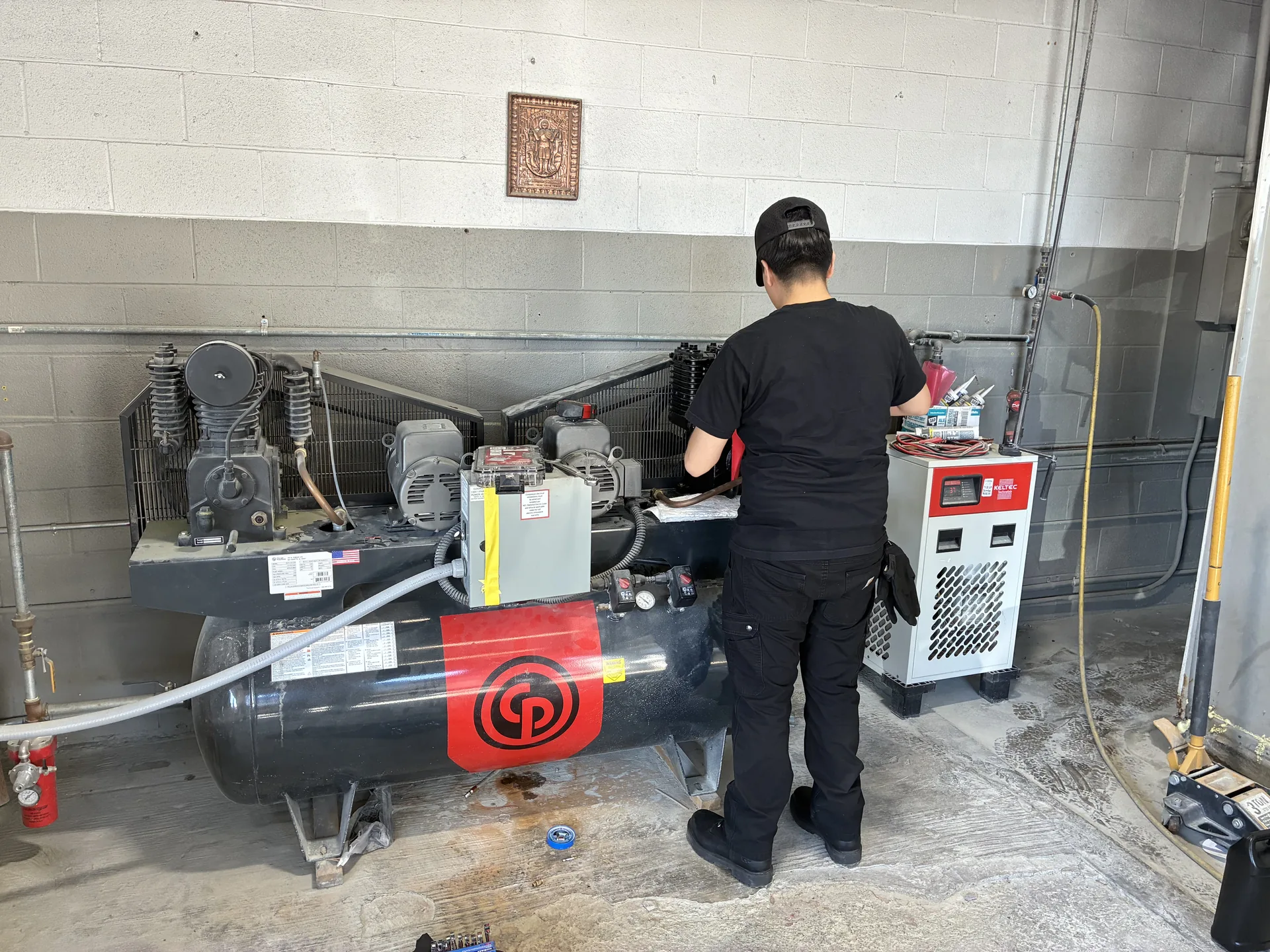
Toolytics Industrial technician servicing a Chicago Pneumatic duplex compressor system
Service on a Chicago Pneumatic duplex system.
Scope and Evidence

What to prepare for a measured assessment

Share the compressor and treatment inventory, current setpoints, production shifts, pressure or air-quality concerns and any available service or logging records. Agree on measurement locations, safe access, operating conditions and any logging period before work begins. A walk-through and a measured assessment have different scopes.

Leak detection scope

Identify the areas to survey, production conditions and safe access. Agree how leaks will be located, identified and recorded, who will complete repairs, and whether a follow-up survey is included. Any estimated leak flow or cost needs its measurement method, assumptions and operating-hours basis recorded.

From findings to a project

Use the findings to define repair work or a maintenance program. For a capacity or treatment change, send the report and required duty with an industrial equipment quote request. Equipment selection follows the measured conditions and agreed project requirements.

Operating context

Record which equipment and production shifts were observed, the period covered and whether the plant was running a representative load.

Observation and evidence

Identify the measurement location, units and supporting readings or logs. Distinguish a measured result from a visual observation or estimate.

Limits and next checks

State which operating conditions were not captured and what additional measurements would be needed before selecting equipment or estimating savings.

Recommended action

Connect the finding to a prioritized action, such as repair, maintenance or system changes, with follow-up measurements where appropriate.

Illustrative report structure only; this is not a customer assessment or a measured result. The actual measurements, deliverables and reporting schedule are agreed for your facility.

Common Questions

Frequently Asked Questions

Something else? Call (844) 310-8665.

  • What’s the difference between a walk-through evaluation and a system assessment?

    A walkthrough looks at the system at a high level and lists findings and priorities. A measured assessment uses agreed measurements or logging to dig into pressure, demand and performance. Which one you need depends on your plant and the question.

  • How long does a compressed air assessment take?

    On-site time depends on system size and scope. Any logging and the report come after. We confirm the visit window and report timing before we start.

  • Will you recommend equipment purchases as part of the assessment?

    Yes, when the findings support it. If old or undersized equipment is causing problems, the report says so. We describe what kind of system fixes it, not a brand. The decision stays with you.

  • What happens after the assessment, and do you also do the repair or maintenance work?

    Yes. The report stands on its own, so you can act on it any way you like. If you want us to do the work, we can quote repair work, set up a maintenance program or spec a replacement installation.

  • Do you do compressed air audits, or only assessments?

    We do walkthroughs and system assessments, which is what most plants asking for an audit need. A full Level 3 audit is a multi-week study with a formal energy model. If a utility rebate requires that, tell us up front and we’ll say so rather than sell you something that won’t qualify.

  • Is there a charge for the walk-through?

    Ask us whether your first walkthrough qualifies for a no-charge visit. A measured assessment or extra work is quoted separately, and any fee is confirmed before we start.

Service area

Serving Los Angeles, Orange County, and the Inland Empire

We do walkthroughs and full assessments across Southern California. The method is the same everywhere; what changes is logistics and what we watch for.

Los Angeles County

Vernon, City of Industry, Carson, Long Beach, Santa Fe Springs, Torrance, El Monte, and Compton. We schedule around production, including off-shift starts if the compressor room can’t go down during the day.

Orange County

Anaheim, Santa Ana, Garden Grove, Fullerton, Buena Park, and Brea. On crowded plant floors one badly set regulator can push header pressure up for everyone, the kind of thing a walkthrough catches fast.

Inland Empire

Ontario, Fontana, Riverside, Rancho Cucamonga, Moreno Valley, San Bernardino, and Pomona. Big buildings and long pipe runs, so pressure loss to the point of use is worth measuring.

Las Vegas Metro

We schedule Las Vegas metro assessments by location and equipment. See Southern Nevada service coverage.

Timing an Inland Empire assessment. Compressor rooms here often run 95 to 100°F in summer, and a dryer that looks fine in March can struggle in July. If your problems seem seasonal, schedule the assessment for the heat, not the calendar.

Compressor planning resources

Use measured findings to inform the repair vs replacement decision, including demand, pressure, condition and lifecycle costs.

Start with a walkthrough.

Tell us where you are, what equipment you run and what’s bothering you. We confirm what we’ll check, the schedule and any fee before we start.

If the findings point to repair, maintenance or installation, we can do the work, or you can take the report and act on it your way.


Msgs may include service updates, scheduling, and inquiry follow-ups from (844) 310-8665. Consent is not required to receive service. Msg & data rates may apply. Msg frequency varies. Reply STOP to opt out, HELP for help. We do not share mobile opt-in information for third-party marketing. Service providers may process it on our behalf. See our Privacy Policy & Messaging Terms.

We’ll follow up within one business day.