
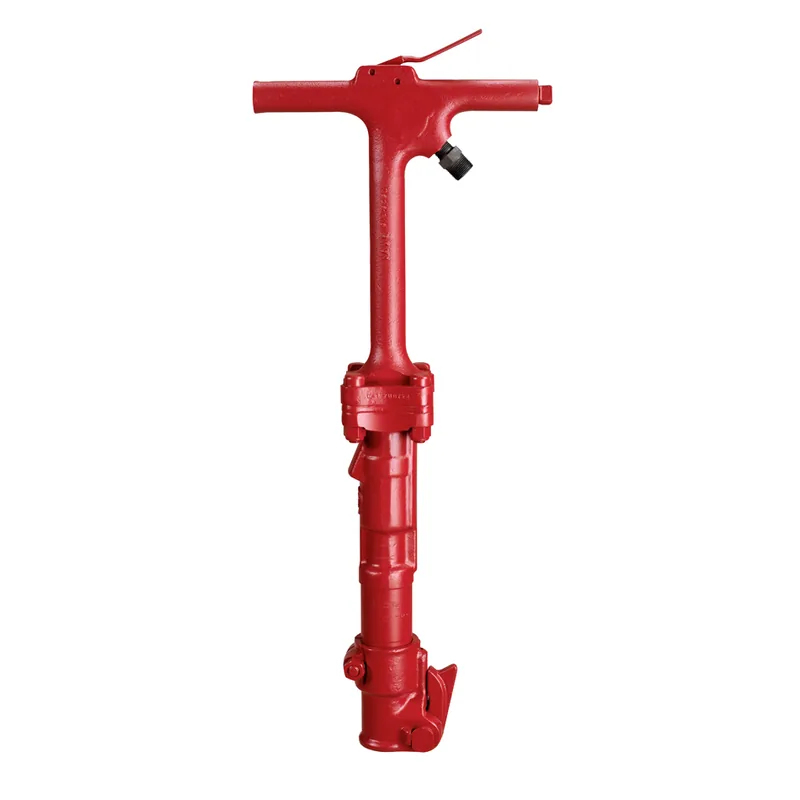
CP 0112 Light Breakers
The lightest class, 30 to 33 lb. For floors, sidewalks, asphalt and masonry. The CP 0112 S is the quieter version. The CP 0112 EX has a longer handle for light trenching.
30 lb class, 45 CFM at 90 PSI
We’re an authorized Chicago Pneumatic distributor. We sell handheld breakers and demolition tools for concrete, asphalt, frozen ground and masonry across Los Angeles, Orange County, the Inland Empire and Las Vegas. We also service compressed air systems, so we can help with the compressor too.
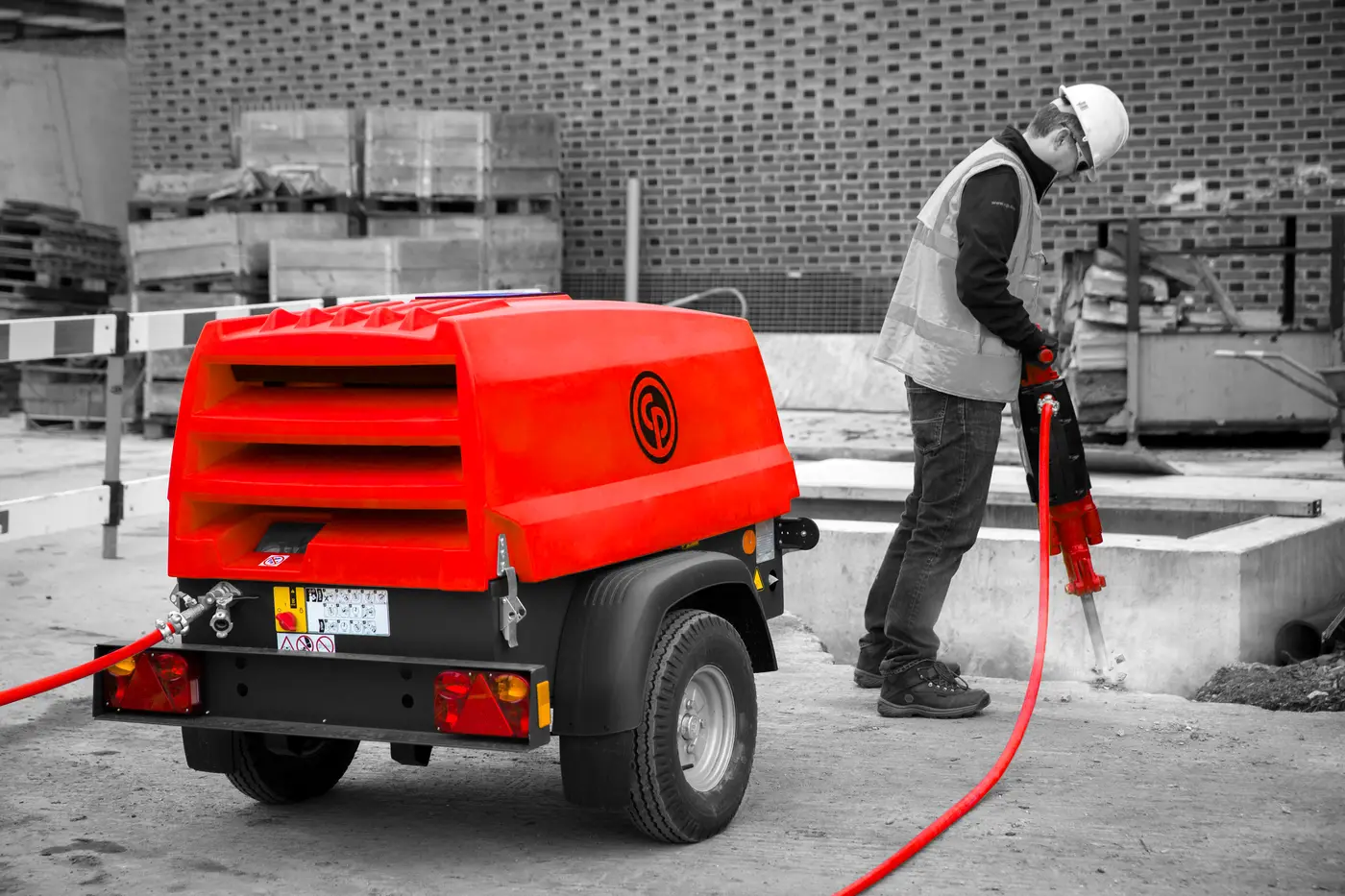
Pictured: a Chicago Pneumatic breaker fed by a CPS 185 portable compressor.
Chicago Pneumatic makes handheld breakers in four weight classes, from 30 lb to 90 lb. The heavier the breaker, the more air it needs, so the class you pick also decides the compressor. Tell us the job and we’ll point you to the right class and shank.
The lightest class, 30 to 33 lb. For floors, sidewalks, asphalt and masonry. The CP 0112 S is the quieter version. The CP 0112 EX has a longer handle for light trenching.
30 lb class, 45 CFM at 90 PSI
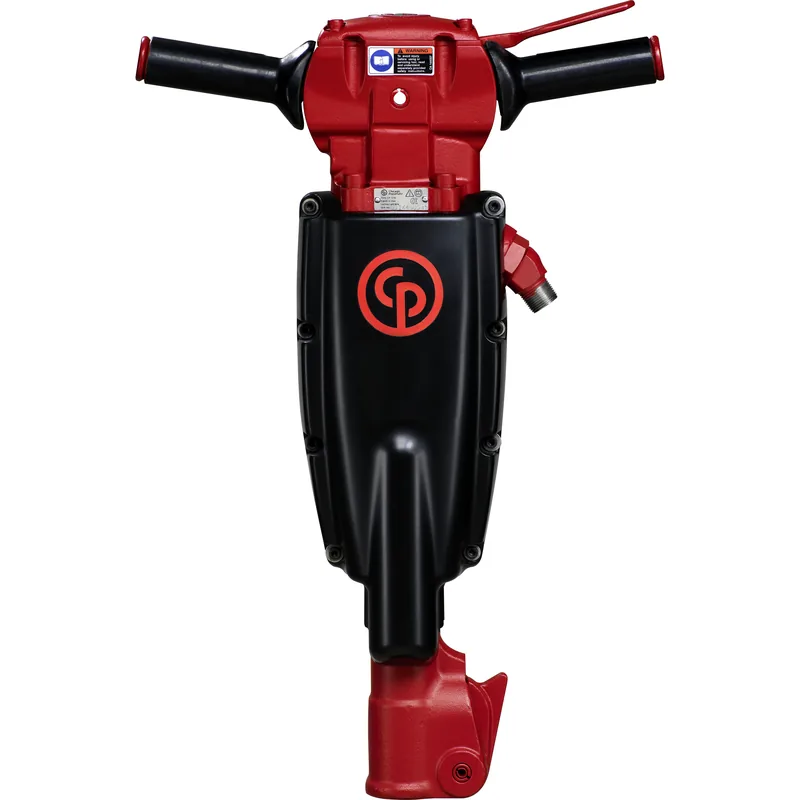
The all-round class for pavement and slab work, 44 to 55 lb depending on version. Quieter and low-vibration models come in 1, 1-1/8 and 1-1/4 inch shanks.
35 lb class, 48 CFM at 90 PSI
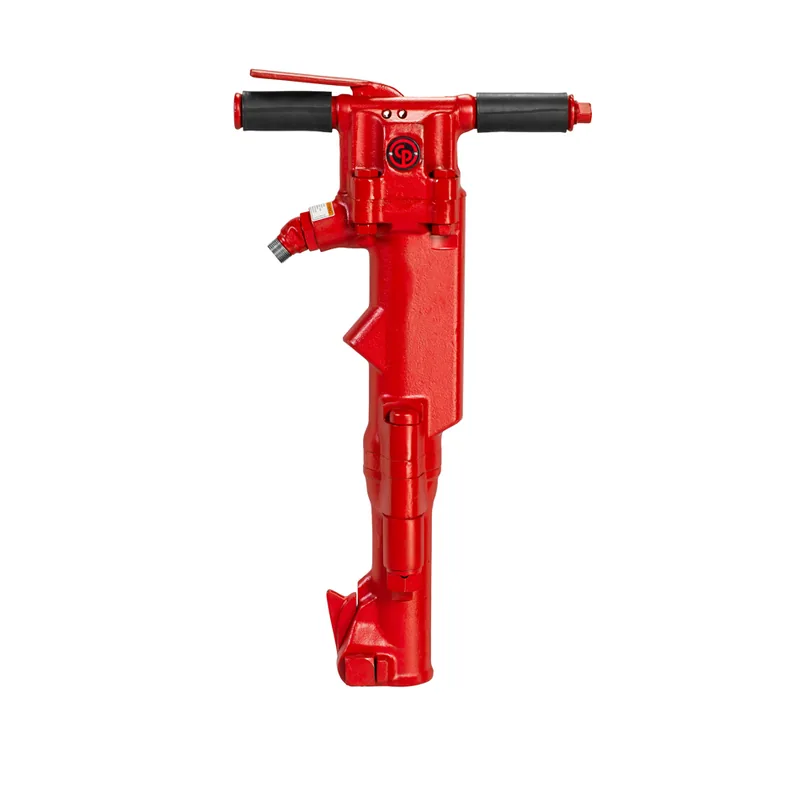
Actual weight is 64 to 75 lb. For thick concrete and all-day roadwork, where a medium breaker bounces on the slab instead of cutting it.
60 lb class, 63 CFM at 90 PSI
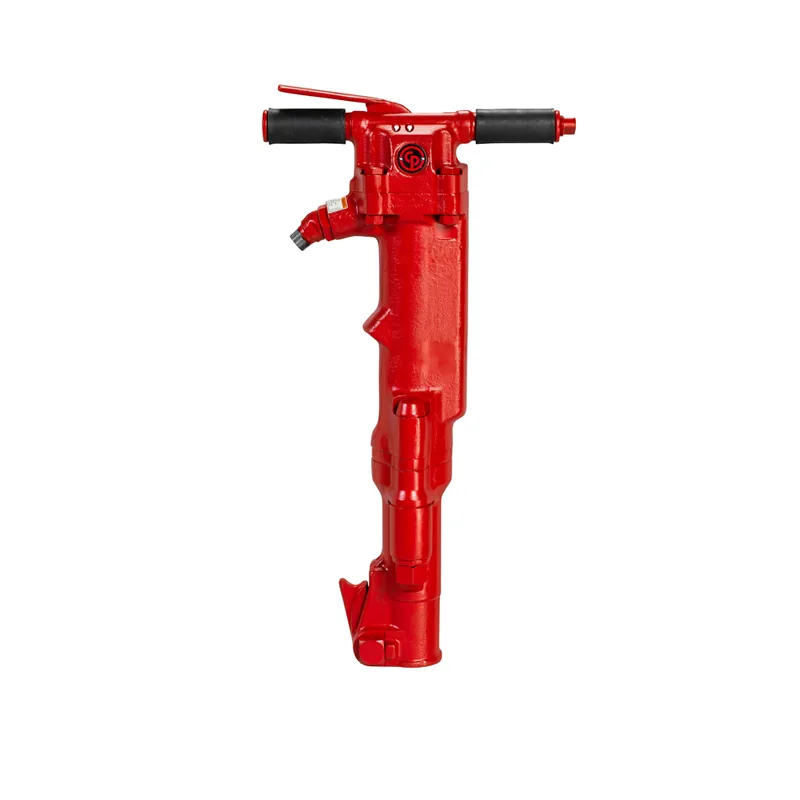
The heaviest class, 82 to 96 lb. For reinforced slab, deep pavement and frozen ground. The CP 1290 SVR adds a low-vibration handle for full-shift use.
90 lb class, 81 CFM at 90 PSI
We also carry Chicago Pneumatic drills, diggers, rivet busters and other jobsite tools. Ask us what’s available.
Every breaker in the Chicago Pneumatic four-bolt range, with shank size, retainer and part number. All four classes use a 3/4 inch NPT air inlet.
Scroll to see all columns. Keyboard: focus the table area and use the arrow keys.
| Model | Hex shank | Retainer | Length | Weight | Part no. |
|---|---|---|---|---|---|
| CP 0112: 30 lb class, 45 CFM at 90 PSI | |||||
| CP 0112 | 7/8 x 3-1/4 | Latch | 20 in | 30 lb | 8900 0030 26 |
| CP 0112 | 1 x 4-1/4 | Latch | 20 in | 30 lb | 8900 0030 23 |
| CP 0112 S | 1 x 4-1/4 | Kick Latch | 20 in | 31 lb | 8900 0030 25 |
| CP 0112 EX | 7/8 x 3-1/4 | Latch | 20 in | 30 lb | 8900 0030 27 |
| CP 0112 EX | 1 x 4-1/4 | Latch | 30-3/8 in | 33 lb | 8900 0030 24 |
| CP 1210: 35 lb class, 48 CFM at 90 PSI | |||||
| CP 1210 | 1 x 4-1/4 | Latch | 21-1/8 in | 44 lb | 8900 0030 01 |
| CP 1210 S | 1 x 4-1/4 | Latch | 21-1/8 in | 45 lb | 8900 0030 03 |
| CP 1210 S | 1-1/8 x 6 | Latch | 23 in | 46 lb | 8900 0030 07 |
| CP 1210 S | 1-1/4 x 6 | Latch | 23 in | 46 lb | 8900 0030 09 |
| CP 1210 SVR | 1 x 4-1/4 | Latch | 23-1/2 in | 51 lb | 8900 0030 05 |
| CP 1210 SVR | 1-1/8 x 6 | Latch | 25-1/2 in | 55 lb | 8900 0030 08 |
| CP 1210 SVR | 1-1/4 x 6 | Latch | 25-1/2 in | 55 lb | 8900 0030 10 |
| CP 1260: 60 lb class, 63 CFM at 90 PSI | |||||
| CP 1260 | 1-1/8 x 6 | Latch | 27 in | 64 lb | 8900 0030 29 |
| CP 1260 | 1-1/4 x 6 | Latch | 27 in | 64 lb | 8900 0030 28 |
| CP 1260 S | 1-1/8 x 6 | Latch | 27 in | 65 lb | 8900 0030 31 |
| CP 1260 S | 1-1/4 x 6 | Latch | 27 in | 65 lb | 8900 0030 30 |
| CP 1260 SVR | 1-1/8 x 6 | Latch | 29 in | 75 lb | 8900 0030 33 |
| CP 1260 SVR | 1-1/4 x 6 | Latch | 29 in | 75 lb | 8900 0030 32 |
| CP 1290: 90 lb class, 81 CFM at 90 PSI | |||||
| CP 1290 | 1-1/8 x 6 | Latch | 29 in | 82 lb | 8900 0030 38 |
| CP 1290 | 1-1/4 x 6 | Latch | 29 in | 82 lb | 8900 0030 37 |
| CP 1290 S | 1-1/8 x 6 | Latch | 29 in | 83 lb | 8900 0030 40 |
| CP 1290 S | 1-1/4 x 6 | Latch | 29 in | 83 lb | 8900 0030 39 |
| CP 1290 SVR | 1-1/8 x 6 | Latch | 31 in | 96 lb | 8900 0030 42 |
| CP 1290 SVR | 1-1/4 x 6 | Latch | 31 in | 96 lb | 8900 0030 41 |
What the letters mean: S is a quieter (silenced) model. SVR is silenced with a low-vibration handle. EX has a longer handle for trench work. The weight class is a name, not the scale weight: a 90 lb class CP 1290 SVR actually weighs 96 lb. Source: Chicago Pneumatic handheld breakers datasheet.
The CP 1260 and CP 1290 replaced the older CP 1230 and CP 1240. If you’re replacing an older tool, we’ll confirm the current model and shank size.
Stock and lead time: we can order every part number above. Send us the part number and your job date and we’ll confirm stock and lead time before you order.
A 90 lb CP 1290 needs 81 CFM at 90 PSI. The smallest portable that runs it puts out 95 CFM, so a single CPS 110 or T110 runs any breaker on this page. If a breaker feels weak on site, check the air first.
Scroll to see all columns. Keyboard: focus the table area and use the arrow keys.
| Breaker | Air required at 90 PSI | Smallest portable that runs one |
|---|---|---|
| CP 0112 (30 lb class) | 45 CFM | CPS 110 or T110 (95 CFM) |
| CP 1210 (35 lb class) | 48 CFM | CPS 110 or T110 (95 CFM) |
| CP 1260 (60 lb class) | 63 CFM | CPS 110 or T110 (95 CFM) |
| CP 1290 (90 lb class) | 81 CFM | CPS 110 or T110 (95 CFM) |
Running more than one tool? Don’t just add these numbers up. How often each tool runs, leaks and pressure drop all change the answer. Our air compressor sizing guide shows how to work it out.
Hose matters too, even with one tool. The US Department of Energy says every 2 PSI of extra pressure drop costs about 1 percent of capacity. A hose that’s too long or too narrow can starve the tool even when the compressor is the right size.
We sell the compressors too, so we can quote the breaker and compressor together. See portable diesel air compressors.
Breaking concrete with a handheld breaker falls under OSHA’s silica rule for construction, 29 CFR 1926.1153. Table 1 of that rule lists jackhammers and handheld chipping tools by name and requires dust control on the tool. So it affects what you buy, not just how you work.
You can use water sprayed at the point of impact, or a shroud with a dust collector. Chicago Pneumatic makes a 36 inch water spray kit that fits any CP breaker, rivet buster or chipping hammer. It puts out a fine mist (6 GPH, 80 degree cone at 40 PSI) and hooks up to a garden hose. Ask us to add it to your quote.
With dust control in place, Table 1 requires no respirator for four hours or less of outdoor work per shift. Over four hours outdoors, or any work indoors or in an enclosed area, needs an APF 10 respirator. Check the current rule for your site before relying on this.
OSHA requires a safety clip or retainer so the steel can’t shoot out of the tool. Every breaker in the table above comes with a latch or kick latch retainer. Replacement safety clips are part number 9246 0204 83.
The hose has to be tied to the tool with a short wire or locking device. Chicago Pneumatic whip checks are part number 9246 0204 86 for hose to tool and 9246 0204 85 for hose to hose. For hose larger than 1/2 inch, OSHA also requires an excess flow safety valve at the air supply.
Sources: OSHA respirable crystalline silica standard for construction and OSHA 3080, Hand and Power Tools. California has its own rules through Cal/OSHA. They’re at least as strict as federal rules but not always the same, so check the Cal/OSHA requirement for your site. This section is a summary to help you buy the right tool and accessories, not a compliance document.
Demolition tools take a beating. These are built to keep running, and to be easier on the operator over a full shift.
Forged alloy steel and a four-bolt backhead hold up to daily use.
Less vibration means less fatigue and better control for the operator.
Built-in oiling keeps the tool running smoothly with fewer maintenance stops.
Floors and pavement, asphalt, bridge work, frozen ground and masonry walls.
If you need a breaker for one short job, rent one. If it’s going on job after job, owning usually makes sense. The costs that decide it aren’t on the daily rate.
Delivery and pickup. Damage waiver or insurance. Fuel and cleaning charges. Late fees when the schedule slips. And you pay through weekends, rain days and inspection delays, whether the tool is working or sitting on the trailer.
The breaker is on your truck when the job moves up. No return date, no reservation, and no finding out the 90 lb breaker is already rented. We can get repair parts too, so a tool you use often can be fixed instead of replaced.
Moil points, chisels, spades and asphalt cutters wear out. They’re the real running cost of owning a breaker, along with retainers and safety clips. We quote the tool and the matching steels together, so you’re not waiting on a point for the first job.
We don’t post rental prices because they change by yard and by week. Tell us what you pay now to rent a 90 lb breaker and we’ll quote buying one so you can compare.

Which breaker weight class do I need?
Light breakers, like the 30 lb class CP 0112, are for floors, sidewalks, asphalt and masonry. Thick concrete, roadwork and all-day demolition need a heavier paving breaker. Tell us the job and we’ll match the weight and shank.
What is the difference between the CP 0112 and CP 0112 S?
The CP 0112 is the standard light breaker. The CP 0112 S is the quieter (silenced) version. There’s also the CP 0112 EX, with a longer handle for light trenching.
How much air does a handheld breaker need?
Between 45 and 81 CFM at 90 PSI, depending on class. The 30 lb CP 0112 uses 45 CFM, the 35 lb CP 1210 uses 48 CFM, the 60 lb CP 1260 uses 63 CFM, and the 90 lb CP 1290 uses 81 CFM. Your compressor needs to supply at least that much air at 90 PSI. See air compressor sizing for air tools, or we can quote the breaker and compressor together.
What can these tools break?
Floors and pavement, asphalt, bridge decks, frozen ground and masonry walls. They’re made for light to medium demolition and plant maintenance work.
What does OSHA require when breaking concrete?
Dust control on the tool. OSHA’s silica rule for construction, 29 CFR 1926.1153, lists jackhammers and handheld chipping tools in Table 1 and requires either water spray at the point of impact or a shroud with a dust collector. Chicago Pneumatic makes a water spray kit that fits any CP breaker. Whether you need a respirator depends on hours worked and whether you’re indoors. California follows Cal/OSHA, so check the rule for your site.
What is the difference between an S and an SVR breaker?
An S model is silenced. An SVR model is silenced and also has a low-vibration handle. That makes SVR models heavier. A 90 lb class CP 1290 is 82 lb, the CP 1290 S is 83 lb, and the CP 1290 SVR is 96 lb.
I have a CP 1230 or CP 1240. What replaced it?
The CP 1260 replaced the CP 1230, and the CP 1290 replaced the CP 1240. Tell us your shank size and we’ll confirm the right model so your steels still fit.
Do you sell breakers and construction tools, or rent them?
We sell them. We’re an authorized Chicago Pneumatic distributor, so you buy and own the tool. We don’t rent.
Last updated October 2026
Tell us the job, the weight class or the model and we’ll follow up within one business day with pricing and availability. Call (844) 310-8665.